
The Dangerous Cost of Pleasing Everyone and Leading with Weakness
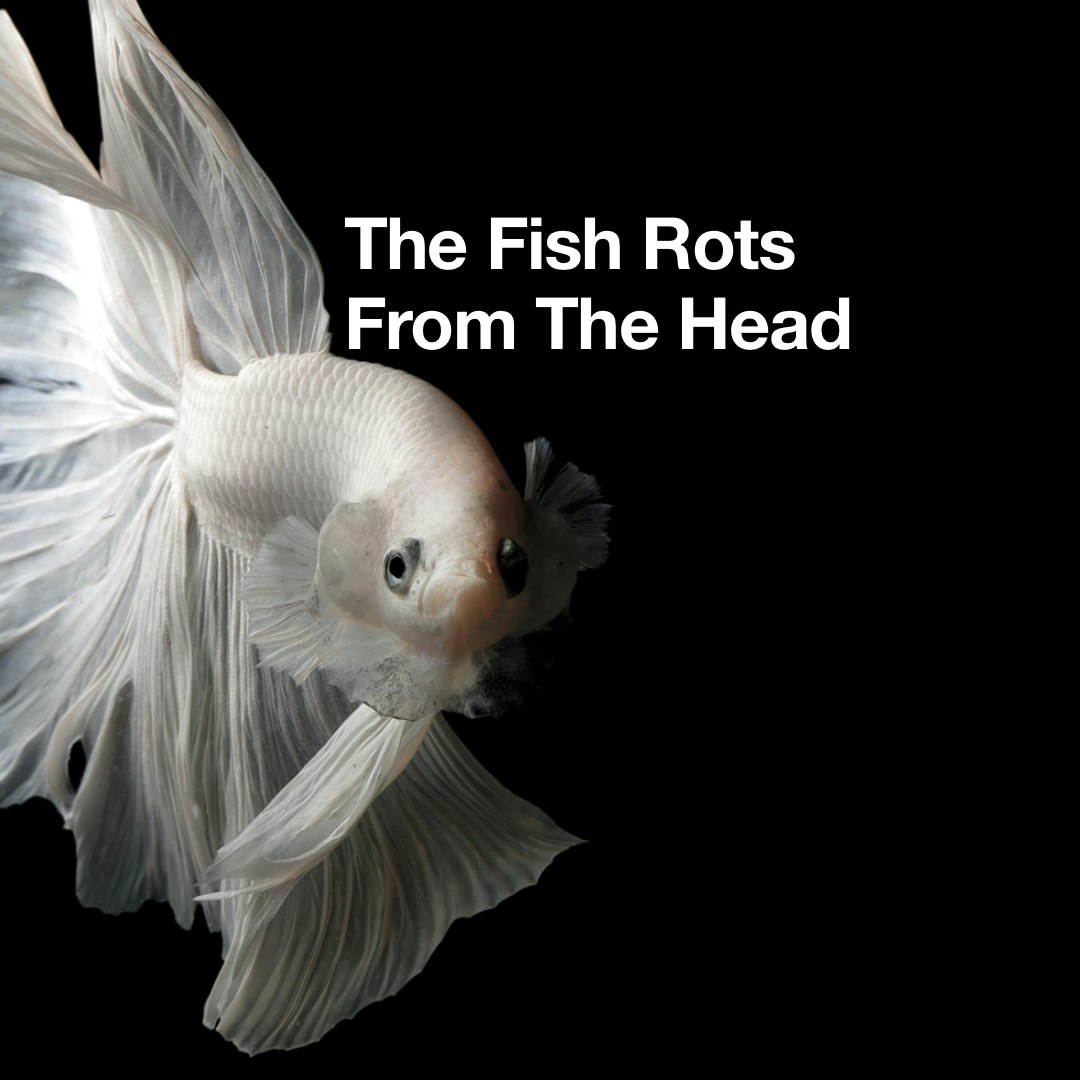
There is an old proverb that says “A fish rots from the head.” In organisations, this is more than just a metaphor it is a brutal truth. Leaders sets the tone, the culture, the pace, and ultimately, the trajectory of the organisation. When those at the top lose their way, when they start making decisions to appease rather than to lead, the rot begins and it spreads fast.
In today’s organisational climate, many leaders fall into the trap of trying to be everything to everyone. Instead of anchoring decisions in principle, strategy, or the long-term good of the organisation, they chase short-term popularity. They give in to noise, to factions, to pressure, to the loudest voice in the room. They fail to read the full picture, misjudging dynamics, underestimating consequences, and forgetting that neutrality in moments of conflict is not strength, it is negligence.
Leadership is not about being liked. It is about being respected, decisive, and clear-eyed about what needs to be done, even when that means saying "no", enforcing hard truths, or making a call that will upset a few in the short term for the health of the many in the long term
A weak leader at the top is bad enough. But an entire group of them? That is a crisis waiting to happen.
When groupthink takes hold, and weak leadership clusters together in a cloud of ego, fear, or indecision, the rot becomes systemic. Accountability vanishes. Good people leave. Toxic people rise. The culture deteriorates. And the very things that made the organisation strong, vision, conviction, excellence, start to fade.
Instead of course correcting, these groups often double down on bad decisions. They confuse noise with insight. They treat every issue as a popularity contest. They operate in silos, protect each other’s egos, and punish those who dare to point out the cracks. They become more concerned with their image than their impact.
And in doing so, they slowly kill the organisation from the inside out.
Once the head of the fish has rotted, you do not try to preserve it. You cut it off.
This is not about being ruthless. It is about survival.
Sometimes, the only way to save an organisation is to remove the leaders who are dragging it down, those who have become too compromised, too self-interested, too disconnected from what the organisation needs. Keeping them in place for the sake of continuity, comfort, or misplaced loyalty does not protect the organisation, it prolongs the damage.
Real leadership demands courage. It requires those in power to make the hard calls, to surround themselves with people who challenge them, and to always act in service of the mission, not their own egos or personal agendas.
The integrity of an organisation begins at the top. If that is compromised, everything else eventually follows. It is not enough to have good people in pockets. You need strong leadership at the helm, those who see the full picture, who understand the dynamics beneath the surface, and who lead not for applause, but for impact.
And when that is missing, you must act quickly and decisively. Because once the fish rots, there are only two options: cut off the head or let the whole thing decay.
To learn more about business skills reach out.